
Ferrite magnets – everything you need to know
Quick navigation
Ferrite magnets
What are soft ferrite magnets?
What are hard ferrite magnets?
What are ferrite magnets made from?
What do ferrite magnets look like?
Advantages of ferrite magnets
Comparison: ferrite vs. neodymium magnets
Ferrite magnets
When I recently came across the term ferrite magnet in an article, the unusual name immediately caught my attention. I had already learned about several types of magnets, but this was one I had never heard of, so I decided to look into it.
There are various types of ferrite magnets, made from combinations of different metals and iron oxide. They are among the most widely used permanent magnets because ferrite magnets are one of the most cost-effective magnetic solutions available.
Their worldwide consumption also shows just how commonly they are used. Thanks to their affordable price, good durability and wide variety of available shapes, they are popular both in industry and in everyday applications.
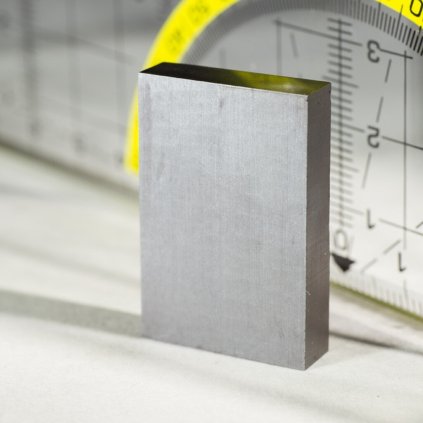
Ferrite prism magnet 30×20×6
Practical ferrite prism magnet suitable for household, technical and industrial applications.
View product
Ferrite cylinder magnet dia. 25×15
Stronger cylindrical ferrite magnet suitable for general holding, technical applications and workshop use.
View product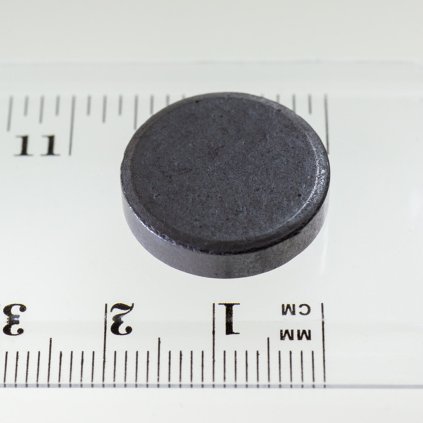
Ferrite cylinder magnet dia. 20×5
Flat cylindrical ferrite magnet suitable for simple holding applications, household use and technical projects.
View productWhat are soft ferrite magnets?
Soft ferrite magnets are materials with low coercivity. Coercivity describes a magnetic material's ability to resist external magnetic influences without becoming demagnetised.
Soft magnetic materials have low coercivity, which means they are less resistant to external influences that can cause demagnetisation. They are mainly used in electrical applications such as transformers, microwave devices, radio antennas and inductors.
What are hard ferrite magnets?
Hard ferrite magnets are ceramic magnets with high coercivity. They are also made from iron oxide combined with various metallic elements.
Hard ferrite magnets are less susceptible to demagnetisation and are commonly used in loudspeakers, electric motors and material-handling applications.
What are ferrite magnets made from?
Ferrite magnets can be isotropic or anisotropic. Isotropic ferrite magnets can be magnetised in any direction, but they have weaker magnetic properties.
Anisotropic ferrite magnets have a preferred direction of magnetisation within their structure and offer stronger magnetic properties, making them more powerful than isotropic ferrite magnets.
Ferrite magnets are produced by calcining a mixture of iron oxide (Fe2O3) and strontium carbonate (SrCO3) or barium carbonate (BaCO3) at temperatures of 1000 to 1350 °C. Additional chemical elements may be added to some types to improve their properties.
The resulting material is ground into fine particles and then pressed. Depending on the manufacturing process, either an isotropic or anisotropic ferrite magnet is produced.
What do ferrite magnets look like?
The most common shapes found on the market include:
- Disc
- Prism
- Ring
Ferrite magnets usually have a matt grey-black appearance and are also commonly referred to as ceramic magnets.
Advantages of ferrite magnets
Advantages
- They do not corrode in water
- They can be used at temperatures up to +250 °C
- Under ideal conditions, sometimes up to +300 °C
- High coercivity, which increases when heated
- They are electrically insulating
- They are low-cost
Disadvantages
- They are not as strong as neodymium magnets
- At temperatures around -20 °C, coercivity decreases and there is a risk of demagnetisation
Where are ferrite magnets used?
- Motors and generators
- Children's toys – magnetic construction sets
- High-temperature applications
- Holding systems – office magnets
- Loudspeakers and microphones
- Automotive industry – magnetic couplings
- Aviation
- Military applications
- Advertising and design
Comparison: ferrite vs. neodymium magnets
Ferrite magnets are less expensive, which makes them a popular choice for many users. In commercial manufacturing, however, neodymium magnets often cannot be replaced.
Neodymium magnets can generate magnetic fields of up to 1.4 tesla. By comparison, ferrite magnets generally produce magnetic fields of approximately 0.5 to 1 tesla.
Ferrite magnets are more resistant to corrosion than neodymium magnets. A more detailed comparison is shown below.
Recommended products
If you are looking for strong magnets for technical and general-purpose applications, you may also be interested in these products:
- Samarium cylinder magnet dia. 3×2
- Samarium prism magnet 10×8×5
- AlNiCo cylinder magnet dia. 15×3
Looking for more magnets?
Choose from a wide range of magnets according to strength, shape and intended use.