
Magnetic separators
Magnetic separators are essential devices designed to remove metallic contaminants — especially ferrous materials — from bulk solids, powders, slurries, and raw material flows. Whether you're working with raw minerals, recycled materials, food products, plastics, or powders, a properly chosen magnetic separator can significantly improve product purity, protect your processing equipment, and ensure compliance with safety and quality standards.



Product sorting
Brands
List of products


Why Magnetic Separation Matters
Protect machinery and reduce downtime
Metallic particles in raw materials or input streams can damage crushers, grinders, mills, and other heavy equipment. A magnetic separator intercepts and removes those contaminants — preventing costly breakdowns and minimizing maintenance.
Improve product quality and purity
For industries where purity is non-negotiable — such as food production, plastics, minerals or chemical processing — magnetic separation helps meet strict standards. Removing ferrous contaminants ensures safer, cleaner products and reduces risk of rejection or recalls.
Enhance operational efficiency and cost-effectiveness
Magnetic separation is a cost-effective, low-maintenance method to safeguard production lines. By removing contaminants early, you reduce scrap rates, avoid damage, and improve throughput — saving time and money in the long run.
1Start from the point where contamination enters
A separator only protects what sits behind it. Decide first whether you need to catch iron before the material enters the machine (hopper, feeder, silo outlet), inside the transport route (pipeline, pneumatic conveying, free fall), or at final inspection before packing.
Most operations end up with two units: one at the intake as the main barrier, and a second, finer one in front of the critical machine (extruder, injection nozzle, mill, filling head).
2Match the design to how the material moves
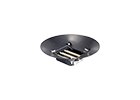
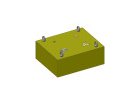
- Magnetic grids and hopper magnets: dry, free flowing material falling through an opening. The simplest and cheapest barrier.
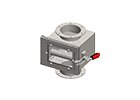
- Flow-through separators: closed pipelines and pneumatic conveying, sized by DN.
- Plate separators and magnetic drums: conveyor belts and free fall, where material runs past or over the magnet in a layer.
- Separation vessels: liquid and pumpable media.
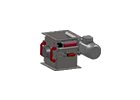
- Telescopic grate and rotary separators: the same capture principle with easier or automated cleaning.
3Read the magnetic induction, not just the word "strong"
Induction in gauss is the comparable figure. In our range, circular grids run at 10,500 Gs, flow-through units from DN 32 to DN 200 at 10,000 to 10,900 Gs, hopper magnets at 13,500 Gs, and the strongest grid designs reach up to 14,500 Gs.
Higher induction pays off for fine iron dust, rust and abraded particles. For coarse fragments a standard unit is usually enough, and the money is better spent on capture surface.
4Take the dimensions from the equipment, not from the catalogue
Flow-through separators are specified by pipe size (DN 32, DN 50, DN 100, DN 150, DN 200) and by the number of magnetic tubes, typically 3, 5 or 9. Grids are specified as length x width x height and the number of rods. Hopper magnets are specified by diameter, from 100 mm to 350 mm.
Measure the opening or the flange before ordering. An undersized unit leaves a bypass gap and the contamination simply flows around it.
5Decide how the unit will be cleaned, and by whom
A separator that nobody empties stops working within days. The economy versions are wiped down by hand. Better designs let you pull the magnetic cores out of the tubes, so the captured iron drops off away from the material flow. Telescopic grate and rotary designs take that further where cleaning intervals are short or access is poor.
Set the interval by how dirty the input is, then check the unit after the first week and adjust.
6Check temperature and the properties of the material
Standard neodymium assemblies are rated to 80 °C and versions up to 120 °C are available for hot granulate or dried material. Above that the magnet loses force permanently, so the temperature rating has to be stated before ordering.
Grids also have material limits: they suit dry, well permeable fractions and are not intended for abrasive or sticky substances, which need a plate, drum or flow-through design instead.
Tip: Send us four things and you will get a specific recommendation instead of a catalogue: what the material is, the throughput, the pipe or opening dimension, and the working temperature. Separators are also built to order, so a non standard size is not a problem.
Related categories to the Magnetic separators category
- Magnets for hoppers
- Magnetic grids
- Magnetic rods
- Magnetic plates
- Separator with telescopic grates
- Rotational separators
- Plate magnetic separator
- Magnetic drum
- Flow magnetic separators
- Magnetic separation vessel
- Magnetic dust traps
- Magnetic swarf collectors
- Magnetic handling aids
- Magnetic sweepers
- Cleaning magnetic mats
- Sorting magnets
- Load magnets
- Magnetic clamps
- JACOB piping systems
- Industrial magnets
Frequently asked questions about magnetic separators
Dry, free flowing material falling through an opening is handled by a magnetic grid or a hopper magnet. Material transported in a closed pipe needs a flow-through separator sized by DN. Material running on a belt or in free fall is better served by a plate separator or a magnetic drum, and liquid or pumpable media by a separation vessel. If cleaning has to be quick or frequent, choose a telescopic grate or a rotary design.
For coarse iron fragments, standard designs are sufficient. For fine iron dust, rust and abraded particles, go higher. Our grids run at 10,500 Gs, flow-through units from DN 32 to DN 200 at 10,000 to 10,900 Gs, hopper magnets at 13,500 Gs, and the strongest grid designs reach up to 14,500 Gs. Capture surface matters as much as the figure itself, so a larger unit at moderate induction often outperforms a small very strong one.
Magnetic separation works on ferromagnetic contamination: iron, steel, rust, weld spatter, iron dust. Austenitic stainless steel, aluminium, brass and other non ferrous metals are not attracted and will pass through. Stainless steel that has been work hardened, machined or abraded can become weakly magnetic and is then partly captured, but that cannot be relied on as a guarantee.
It depends entirely on how contaminated the input is. Economy units are wiped down by hand, while better designs let the magnetic cores be pulled out of the tubes so the captured iron falls off away from the material flow. Check the unit after the first week of operation and set the interval from what you find. A separator that is full has effectively stopped protecting the line.
Standard neodymium assemblies are rated to 80 °C and versions up to 120 °C are available for hot granulate or dried material. Exceeding the stated temperature weakens the magnet permanently, so state the real working temperature when ordering, including short peaks during start up or drying.
Yes. Alongside the standard size ranges, separators are manufactured to customer requirements, which is the usual route when the opening, flange or installation space does not match a catalogue unit. Send us the material, throughput, dimension and working temperature and we will propose a design and quote it.
Magnetic separation is the cheapest insurance a production line can buy, and the most common mistake is choosing the unit by price instead of by where the iron gets in. Our range covers the whole route the material takes: hopper magnets, magnetic grids, rods and plates, telescopic grate and rotary separators, plate separators, drums, flow-through units from DN 32 to DN 200 and separation vessels, with induction from 10,000 Gs up to 14,500 Gs and temperature versions up to 120 °C. We do not only resell separators, we develop and manufacture them, so a non standard dimension, a different flange or a specific cleaning method can be built to order. Tell us the material, the throughput and the connection size and you will get a specific proposal.


