
Samarium magnets
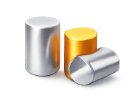
Samarium magnets are also very strong, but their great advantage is their high temperature resistance – up to 300 °C. SmCo magnets are also resistant to corrosion, which is why we sell them without surface treatment. In the magnets section, you will find all other types of magnets.


Product sorting
Brands
According to the shape
Diameter range A (mm)
Height range B (mm)
Temperature resistance range
List of products


1Buy samarium for the temperature, not for the force
SmCo is a strong material, close to neodymium, but that is not the reason to choose it. Every magnet in this category sits in the 201 to 350 °C band, with working temperatures reaching around 300 °C, where an ordinary neodymium magnet has long since lost its force permanently.
If your application runs below 80 °C, neodymium will do the same job for a fraction of the price. Samarium earns its cost only where the heat is real.
2Count on the stability, not just the maximum
The headline number is the maximum working temperature, but the more useful property is how little SmCo changes on the way there. Its force falls by roughly 0.03 % per degree, against roughly 0.11 % per degree for neodymium.
In practice that means a samarium magnet in a machine that swings between cold mornings and hot running holds almost the same at both ends. For sensors, measuring instruments and anything calibrated, that predictability matters more than peak strength.
3Take advantage of the bare surface
SmCo resists corrosion, so we sell it without any surface treatment. There is no nickel layer to chip, no epoxy to degrade and no plating thickness to allow for.
That has a practical consequence beyond durability: the dimension you order is the dimension you get, which makes samarium the easier choice for a precise fit into a machined bore or a sensor housing.
4Pick the shape from the mounting
- Cylinders, the largest part of the range, for seats, bores, sensors and point holding.
- Blocks for flat surfaces, assemblies and anywhere the contact needs a footprint.
- Rings where something has to pass through the centre.
Cylinder diameters run from about 3 to 30 mm and heights up to the 35 to 40 mm band, so this is a range of small precision components rather than large holding magnets.
5Handle it more carefully than neodymium
SmCo is the most brittle of the common magnet materials. It chips at the edges and cracks on impact more readily than neodymium, and a cracked samarium magnet is an expensive loss rather than a cheap one.
Tip: Before ordering samarium, measure the temperature at the magnet under continuous load. Customers often buy SmCo for a machine that never exceeds 100 °C, where a high grade neodymium magnet would have done the same job at a fraction of the cost. Tell us the real figure and we will say which material you need.
Related categories to the Samarium magnets category
- SmCo cylinders
- SmCo rings
- SmCo blocks
- Cylinders by diameter A
- Cylinders by height B
- Diameter up to 5 mm
- Diameter 5 to 10 mm
- Diameter 10 to 15 mm
- Diameter 15 to 20 mm
- Diameter 20 to 25 mm
- Diameter 25 to 30 mm
- Diameter 30 to 35 mm
- Height up to 5 mm
- Height 5 to 10 mm
- Height 10 to 15 mm
- Heat-resistant magnets
- Neodymium 201 to 350 °C
- Ferrite 201 to 350 °C
- Neodymium magnets
- All magnets
Frequently asked questions about samarium magnets
The whole range here falls in the 201 to 350 °C band, with working temperatures reaching around 300 °C. That is well beyond neodymium, where even the highest temperature grades stop at about 200 °C and the standard grade fails at around 80 °C. The exact maximum working temperature is listed in the parameters of every product.
No, slightly weaker for the same size at room temperature. The comparison only turns in favour of samarium once the temperature rises: above roughly 200 °C the neodymium magnet has lost its force permanently while the samarium one is still working. Buy SmCo for heat and stability, not for maximum force.
Because of the raw materials. SmCo contains cobalt and samarium, both considerably more expensive than the iron that makes up most of a neodymium magnet, and the material is produced in far smaller volumes. A samarium cylinder can cost tens of times more than a neodymium one of the same size, which is why it makes sense only where the working conditions genuinely require it.
Because SmCo resists corrosion and does not need one. Neodymium always carries a nickel, epoxy or rubber layer that can chip and let corrosion start; samarium has nothing on its surface to fail. It also means the stated dimension is the actual dimension, with no plating thickness to allow for when fitting into a machined seat.
More brittle than neodymium, which is already brittle. SmCo chips at the edges and cracks on impact easily, so let two magnets meet slowly rather than snapping together, use spacers between larger pieces and never drop one on a hard floor. Given the price per piece, careful handling pays for itself quickly.
Samarium is the material you reach for when neodymium has run out of temperature. Our whole SmCo range is rated in the 201 to 350 °C band, with working temperatures around 300 °C, and because SmCo resists corrosion we supply it without any surface treatment, so there is no plating to chip and no coating thickness to allow for. You will find cylinders, blocks and rings in small precision sizes, with diameters from about 3 to 30 mm. Since we stock neodymium and ferrite alongside it, we will tell you honestly when a cheaper material would do the same job.


