
Magnetic holders
The steel shell significantly increases the holding force of the magnet used in the magnetic lens. We sell a wide range of shapes and sizes of magnetic holders. Magnetic lenses are suitable for a wide temperature range. Magnetic lenses can also be referred to as magnetic holders, magnetic hooks, holding magnets, or pot magnets.
-
 Flat magnetic lenses with hole for countersunk screw
-
Flat magnetic lenses with thread
-
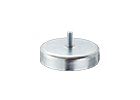
Magnetic lenses with stem and external thread
-
Atypical magnetic lenses
-
Flat magnetic lenses
-
Magnetic cylindrical lenses without thread
-
Magnetic lenses with stem and internal thread
-
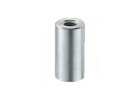
Magnetic cylindrical lenses with internal thread
-
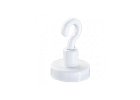
Magnetic hooks
-
Rubberized magnetic lenses
-
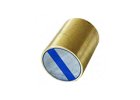
Magnetic cylindrical brass lenses with tolerance h6





Product sorting
List of products


Listing controls
1Understand what the steel shell does
A magnetic holder is a magnet seated in a steel pot. The shell channels the magnetic field to the working face instead of letting it spread in all directions, which is why a pot magnet holds substantially more than the same magnet on its own.
The consequence matters when you design the part: the force acts on the open face only. The sides and the back of the shell hold almost nothing, and the holder needs a flat steel counter surface to reach its rated figure. You will also find these products called magnetic lenses, holding magnets or pot magnets.
2Start from how it will be fixed, not from the force
Mounting decides the shape, and the range covers every common case:
- Flat lens: plain, for gluing or seating into a recess.
- Countersunk hole: screwed on with a countersunk screw sitting flush.
- Internal thread: you screw a bolt or rod into the holder.
- External thread or stem: the holder is screwed into your part or fixed with a nut.
- Hook: for hanging without any drilling at all.
- Rubberised: where the counter surface is painted or must not be scratched.
- Brass cylindrical with h6 tolerance: for jigs and fixtures that need a defined fit in a bore.
3Pick the diameter for the force you need
Diameters run from 4 mm up to 125 mm, and the holding force follows the diameter far more closely than it follows the height. Work with a reserve of 2 to 3 times the weight you need to hold.
Remember what the stated figure means: direct contact with thick, flat, clean steel, pulled straight off. Paint, thin sheet metal, a rough surface or a screw head standing proud will all reduce it, in some cases by more than half.
4Match the thread to the hardware you already have
Threaded versions in this range use common metric sizes such as M3, M4 and M6, and each product states the thread length as well as the size, for example M4 with a thread length of 7 mm.
Check that figure against your screw. A bolt that bottoms out in the thread pushes against the magnet inside the shell, and neodymium is brittle enough that this cracks it. Tighten by hand until the holder seats, and use a thread locking compound rather than more torque on anything that vibrates.
5Check the temperature at the holder
The category can be filtered by temperature resistance and covers three bands: 41 to 80 °C for ordinary interior use, 151 to 200 °C for warm machinery, and 351 to 550 °C for genuinely hot applications.
What counts is the temperature at the holder under continuous operation, not the temperature of the room. Below the stated maximum the holder gives up a little force while hot and recovers on cooling; above it the loss is permanent.
6Think about the direction of the load
A holder resists a straight pull many times better than a sideways slide. A holder rated at 20 kg can start to creep under a few kilograms of shear load, which is what happens on a vertical wall when a sign gradually works its way down.
Tip: If the load acts sideways, a rubberised holder usually solves it better than a bigger one. The rubber adds friction against the surface, spreads the contact and protects the paint underneath, which is exactly why it is the standard choice on vehicles and painted panels.
Related categories to the Magnetic holders category
- Flat magnetic lenses
- Flat lenses with countersunk hole
- Flat lenses with thread
- Cylindrical lenses without thread
- Cylindrical lenses with internal thread
- Lenses with stem and internal thread
- Lenses with stem and external thread
- Brass lenses with tolerance h6
- Rubberized magnetic lenses
- Atypical magnetic lenses
- Magnetic hooks
- Magnet with thread
- Magnets with carabiner
- Magnetic fastening kits
- Counterpart to magnet with hole
- Magnetic tool bar
- Magnetic tool holder
- Door magnets
- Magnets for cabinets
- Heat-resistant magnets
Frequently asked questions about magnetic holders
Because of the steel shell around it. The shell concentrates the magnetic field into the open working face instead of letting it spread in every direction, so the same magnet delivers substantially more holding force. The trade-off is that the force acts on that one face only, and the sides and back of the holder hold almost nothing.
Start from how the holder will be fixed to your part. A countersunk hole suits a screw fixing, an internal thread lets you screw a bolt or rod into the holder, a stem with an external thread screws into your part, a flat lens is for gluing or seating into a recess, and a hook hangs a load without drilling at all. The brass version with an h6 tolerance is for jigs and fixtures that need a precise fit in a bore.
Diameters run from 4 mm up to 125 mm, and threaded versions use common metric sizes such as M3, M4 and M6. Each product states the thread length as well, for example M4 with a thread length of 7 mm. Check that figure against your screw, because a bolt that bottoms out presses on the brittle magnet inside the shell and can crack it.
The category can be filtered by three temperature bands: 41 to 80 °C, 151 to 200 °C and 351 to 550 °C, and the exact maximum working temperature is listed with every product. Choose by the temperature measured at the holder under continuous operation, not by the temperature of the room, since exceeding the limit causes a permanent loss of force.
The rating applies to direct contact with a thick, flat, clean steel plate, pulled straight off. Paint, rust, dust, a rough surface, thin sheet metal or a screw head standing proud all reduce it. Direction matters just as much: a holder resists a straight pull many times better than a sideways load, so a sign on a vertical wall may creep downwards long before the rated force is reached. A rubberised holder adds friction and usually fixes that.
A magnet in a steel shell holds far more than the same magnet on its own, which is why a pot magnet is the part most designers reach for. We stock the whole family: flat lenses, versions with a countersunk hole, internal and external threads, stems, hooks, rubberised holders and brass cylinders with an h6 tolerance, in diameters from 4 mm up to 125 mm and in temperature classes reaching 351 to 550 °C. Every product states the diameter, height, thread size and length, holding force and maximum working temperature. Send us the weight, the surface and the direction of the load and we will name the holder.


