
Magnetic Mats – Their Uses and Sale
Magnetic Cleaning Mats: Protecting Operations from Metal Contaminants
A magnetic mat captures ferromagnetic shavings, filings and metal dust from the soles of work footwear. It is primarily placed between metalworking areas and cleaner production or storage zones.
- Reduces the transfer of iron and steel contaminants.
- Operates without an electrical power supply.
- Consists of neodymium magnets and a removable rubber layer.
- Available in sizes 500 × 500 and 1000 × 500 mm.
- Requires regular cleaning and inspection.
How does a magnetic mat work?
A magnetic mat contains powerful neodymium magnets covered by a rubber walking surface. When a worker steps across the mat, the magnetic field attracts ferromagnetic contaminants caught on the soles of their footwear.
The mat mainly captures:
- steel shavings and filings,
- iron dust,
- small pieces of sheet metal, wire and fragments,
- other small ferromagnetic contaminants.
It will not capture aluminium, copper, brass, plastic, sand or other non-magnetic contaminants. It therefore does not replace an ordinary cleaning mat, changing footwear or other hygiene measures.
Where are magnetic mats used?
- between metalworking and clean production zones,
- at entrances to food-processing facilities,
- in engineering and machining plants,
- in plastics and rubber production,
- in warehouses and controlled operations,
- where the transfer of metal shavings needs to be reduced.
How do you choose the right size?
500 × 500 mm mat
The compact version is suitable for narrower passageways and areas with limited space. For better effectiveness, workers must actually step onto the mat.
1000 × 500 mm mat
The longer mat creates a larger cleaning zone and increases the likelihood that workers will step on it with both feet. It is suitable for busier entrances and wider passageways.
Position the mat so that it cannot easily be bypassed. The surface underneath must be flat, firm and clean.
Standard and UP versions
The individual versions differ in construction, weight, number of magnets, thickness of the rubber layer and magnetic field density.
- Standard mat: high magnetic field density and compact construction.
- UP: plastic support structure and rubber layer secured around the perimeter with magnetic tape.
- Longer model: larger surface area for frequently used passageways.
The choice depends on the width of the passageway, amount of contamination, traffic frequency and required durability.
How do you clean a magnetic mat?
- Temporarily close or mark the passageway.
- Wear work gloves resistant to sharp shavings.
- Remove the upper rubber section from the magnetic base.
- Move it above a suitable container.
- Shake off or wipe away the contaminants.
- Inspect the rubber, magnetic section and edges of the mat.
- Return the clean rubber section to the correct position.
Adjust the cleaning frequency to the operating conditions. A thick layer of metal contaminants can reduce effectiveness and damage the rubber surface.
Safe use
- The mat must lie flat and must not create a trip hazard.
- Replace a damaged or warped rubber section.
- Do not remove metal shavings with bare hands.
- Maintain a safe distance from sensitive electronics and medical implants.
- Do not consider the mat to be the only barrier against operational contamination.
Recommended magnetic mats
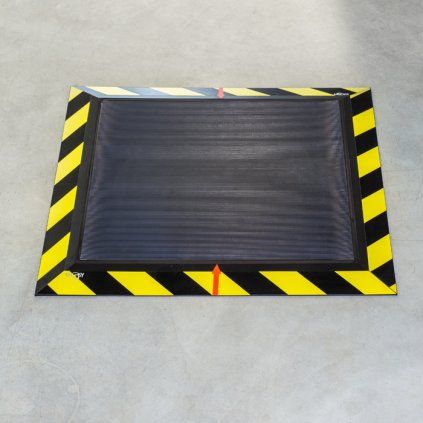
Magnetic mat 500 × 500 mm UP
Compact mat with a plastic construction and removable rubber section for transition areas between metalworking and cleaner zones.
- Dimensions 500 × 500 mm
- Magnetic flux density 2,871 Gs
- Pull-off force stated in the description 16 N
- Weight approximately 9–9.5 kg
- Neodymium magnets
- Product code 50514
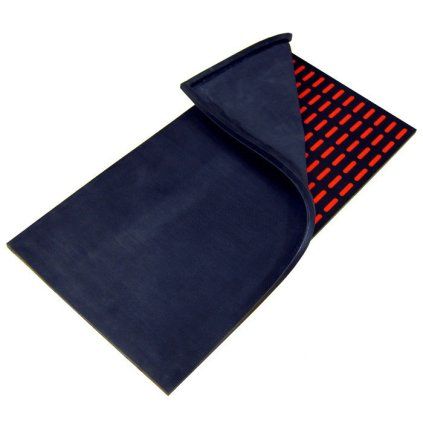
Magnetic mat 1000 × 500 mm
Longer version for frequently used passageways and creating a larger magnetic cleaning zone.
- Dimensions 1000 × 500 mm
- Height of the standard version approximately 19 mm
- Neodymium magnets beneath the rubber layer
- Suitable for wider and frequently used entrances
- Product code 50328
Note: detailed weight and magnetic performance values were not available on the product page, so they are not stated here.
View product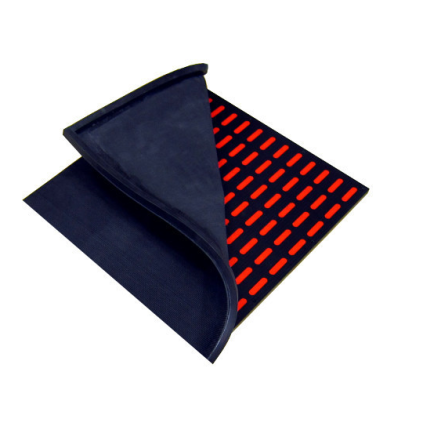
Magnetic mat 500 × 500 mm
Standard compact model for capturing ferromagnetic contaminants from the soles of work footwear.
- Dimensions 500 × 500 mm
- Weight 6 kg
- Magnetic flux density 3,572 Gs
- Pull-off force 18 N
- Neodymium magnets
- Product code 50337
Frequently asked questions
Which contaminants does the mat capture?
Iron and steel shavings, filings, metal dust and other small ferromagnetic particles.
Does it also capture aluminium or copper?
No. These materials are not ferromagnetic.
Where should the mat be placed?
In the transition between metalworking and a cleaner production, storage or food-processing zone.
How often does it need to be cleaned?
According to the amount of contamination. In heavily contaminated operations, inspect and clean it every day or during the shift.
Does the mat replace changing footwear?
Not automatically. It is a supplementary measure that should form part of a broader operational cleanliness system.
Is the 500 or 1000 mm version more suitable?
The longer model provides a larger cleaning area. The smaller version is more practical in confined spaces.
Summary
A magnetic mat helps reduce the transfer of ferromagnetic contaminants from metalworking areas into cleaner operations. Neodymium magnets attract shavings and metal dust through the removable rubber layer.
Position the mat so that workers must actually walk across it. Regular cleaning maintains its effectiveness and protects the rubber walking surface.
Need to reduce the transfer of metal contaminants?
Choose a compact or extended magnetic mat according to the width of the passageway and the operating load.