
How to remove limescale? Proven tips!
Quick navigation
How to remove limescale
What is limescale?
How does limescale form?
What problems does limescale cause?
Is limescale harmful to our health?
How to remove limescale in the short term
How to prevent limescale build-up in the long term
Where does limescale most commonly occur?
How to remove limescale
Did you know that irritated skin and dry hair can be associated with limescale from hard water? If you want to know what limescale is and how to get rid of it, this article provides a clear and practical overview.
What is limescale?
Limescale is a deposit left behind by hard water. It consists mainly of calcium carbonate, which builds up inside pipes, household appliances and on surfaces that regularly come into contact with water.
It usually appears as a chalky white coating on taps, shower heads, tiles or inside kettles and washing machines. If it is not dealt with in time, it can gradually cause technical problems and increase household running costs.
How does limescale form?
Household water contains dissolved calcium and magnesium. When the water evaporates, calcium carbonate deposits can form.
The harder the water, the more limescale tends to develop. It forms most often in areas exposed to hot water or where water is repeatedly heated and evaporated.
The deposits build up in layers and gradually trap additional minerals. This is why limescale becomes worse over time and increasingly difficult to remove.
What problems does limescale cause?
The two main problems associated with limescale are:
Higher energy bills – when a heating system becomes coated with limescale, it has to work harder. Even 1 mm of limescale can increase energy consumption by several percent.
Damage to appliances – limescale reduces water flow and places additional strain on heat exchangers and other components. This can shorten the service life of appliances and increase the risk of breakdowns.
Is limescale harmful to our health?
Limescale itself is not generally considered harmful to health. It contains calcium and magnesium, which are naturally occurring minerals.
The issue is mainly practical: hard water deposits can contribute to dry skin, make soap and shampoo more difficult to rinse away, and negatively affect the condition of hair and the scalp.
If plumbing systems are neglected for long periods, limescale can also contribute to damage to pipes and appliances.
How to remove limescale in the short term
If you want to remove limescale quickly, you can use either natural or chemical cleaning products. Both approaches can work, but they generally provide only a short-term solution.
Vinegar
How to remove limescale from a tap
Soak a cloth in vinegar, wrap it around the tap and leave it in place for approximately one hour. Then wipe the surface and rinse it thoroughly.
How to remove limescale from a toilet
Pour several cups of vinegar into the toilet bowl and leave it overnight. In the morning, scrub the bowl and flush.
How to remove limescale from tiles
Mix water and vinegar in a spray bottle, apply it to the affected areas, leave it to work and then scrub the surface.
How to remove limescale from a kettle
Pour a mixture of vinegar and water into the kettle, heat it and then rinse the kettle thoroughly with clean water.
How to remove limescale from a shower head
You can use lemon or a vinegar solution. Leave it to work and then clean the shower head with a brush.
Homemade cleaning paste
Mix water with baking powder to create a paste. Apply it to the affected area, leave it for a short time and then wipe it away.
Chemical removal
Limescale can also be removed using specialist products based on mild acids. These tend to work faster, but you should always follow the instructions and make sure the product is suitable for the specific surface.
How to prevent limescale build-up in the long term
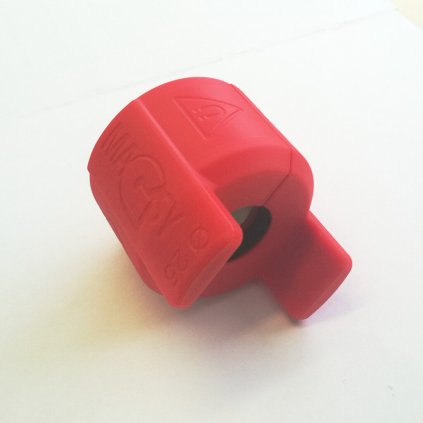
1. Magnetic water de-hardener
A longer-term solution is a magnetic water de-hardener. It does not require electricity, replacement cartridges or complicated installation. It simply needs to be attached to the pipe.
The neodymium magnet inside the device changes the properties of salts in the water and helps slow down the formation of limescale. The effect can vary depending on water hardness, the condition of the pipework and water temperature.


2. Water pre-filtration
Another option is to install a filtration system. This can be effective, but it usually requires a higher initial investment, professional installation and regular maintenance.
Where does limescale most commonly occur?
The bathroom and kitchen are the most common areas. Typical places where limescale appears include:
- showers and baths,
- taps and mixers,
- sinks and toilets,
- tiles and floors,
- pipework,
- washing machines, dishwashers, coffee machines and kettles,
- kitchen sinks and appliances.
Recommended products
- Magnetic water de-hardener 20 mm
- Magnetic water de-hardener 25 mm
- Magnetic water de-hardener 30 mm
Looking for a solution for limescale?
Choose a suitable magnetic water de-hardener and help reduce limescale build-up over the long term.