
4 clever ways to use magnets at home
Why use magnets for cabinet doors?
Cabinet door magnets provide firm, quiet and reliable closing for furniture doors. They are particularly useful when doors do not close properly, open on their own or when you want a simple closing system without complicated hardware.
- They reliably keep cabinet doors closed.
- They prevent doors from opening on their own.
- They help eliminate annoying misalignment, banging and squeaking.
- Installation is quick and simple.
- They are suitable for wardrobes, chests of drawers, drawers, display cabinets and office furniture.
- You can choose between more economical ferrite versions and stronger neodymium versions.
Are you tired of cabinet doors that do not close properly or keep opening on their own? A practical solution is cabinet magnets, also known as furniture magnets, door magnets, magnetic catches, magnetic closures or magnetic latches.
With a magnetic closing system, the doors remain securely closed and you can avoid unpleasant scraping, squeaking, banging or doors repeatedly opening after they have been shut.
What types of cabinet magnets do we offer?
Our range includes a wide selection of cabinet and furniture magnets for different types of furniture. You can choose between ferrite and neodymium versions. They mainly differ in magnetic strength, price and suitability for specific applications.
Ferrite magnets
An economical solution with a long service life and reliable door closing. Suitable for standard cabinets, chests of drawers, lighter doors and applications where extremely high magnetic strength is not required.
Neodymium magnets
A stronger solution for secure holding, even with heavier doors. Neodymium magnets provide high magnetic strength despite their compact size, making them ideal where a particularly firm closure is required.
Ferrite or neodymium magnet for a cabinet?
If you are choosing a magnetic closure for the first time, the most common question is whether to use a ferrite or neodymium magnet. A ferrite version is usually sufficient for standard cabinets. For heavier doors, larger wardrobes, display cabinets or whenever you need a stronger closure, we recommend a neodymium magnet.
Not sure which magnet to choose?
For standard cabinets, we recommend a rectangular door magnet. If you need maximum strength and a firm closure, choose a version with a neodymium magnet. For larger or heavier doors, you can also use two magnetic assemblies – for example, one at the top and one at the bottom.
Recommended cabinet magnets
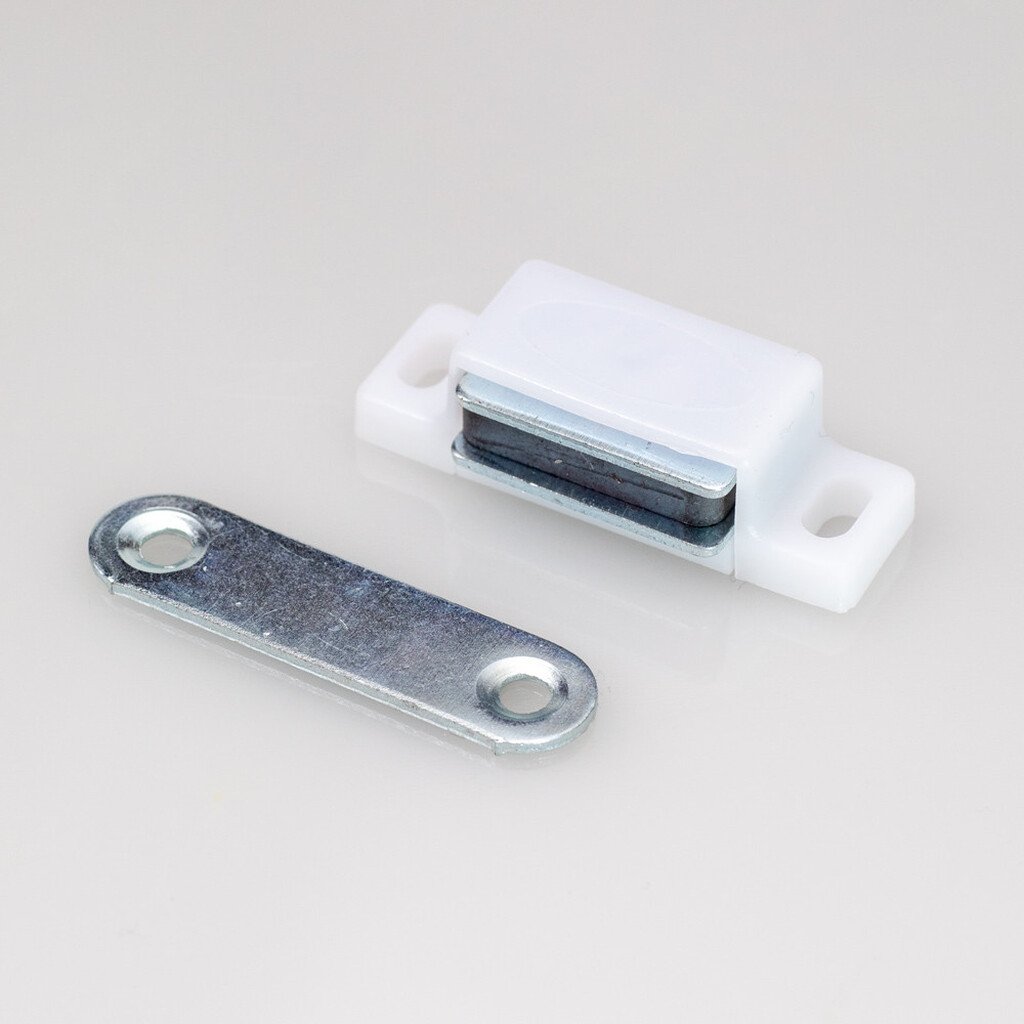
Rectangular furniture door magnet
A reliable solution for wardrobes, chests of drawers and furniture doors. The larger contact surface helps provide a secure closure.
- Easy installation
- Long service life
- Suitable for standard furniture
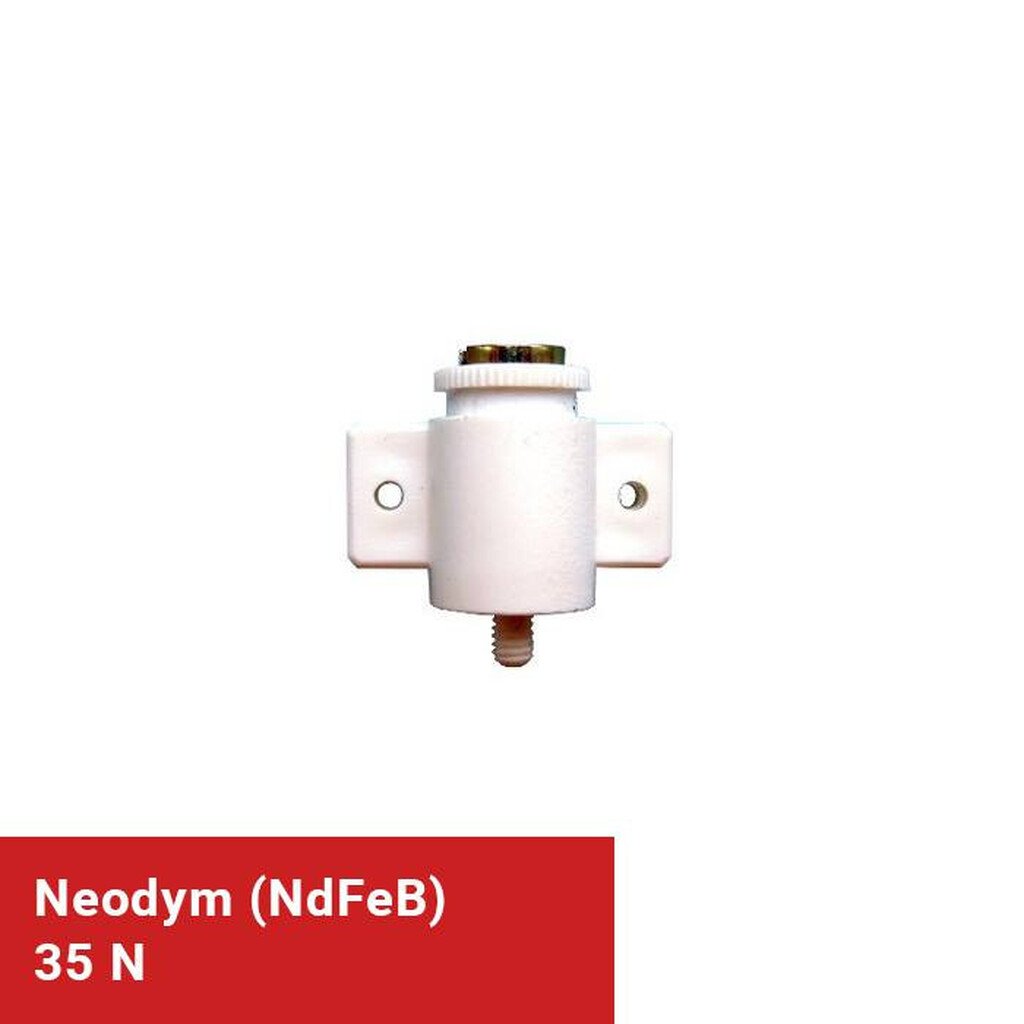
Height-adjustable furniture magnet with neodymium magnet
A premium solution with high magnetic strength. Ideal for more demanding applications, heavier furniture doors and situations where more precise adjustment is required.
- Strong neodymium magnet
- Adjustable design
- Firm door closure
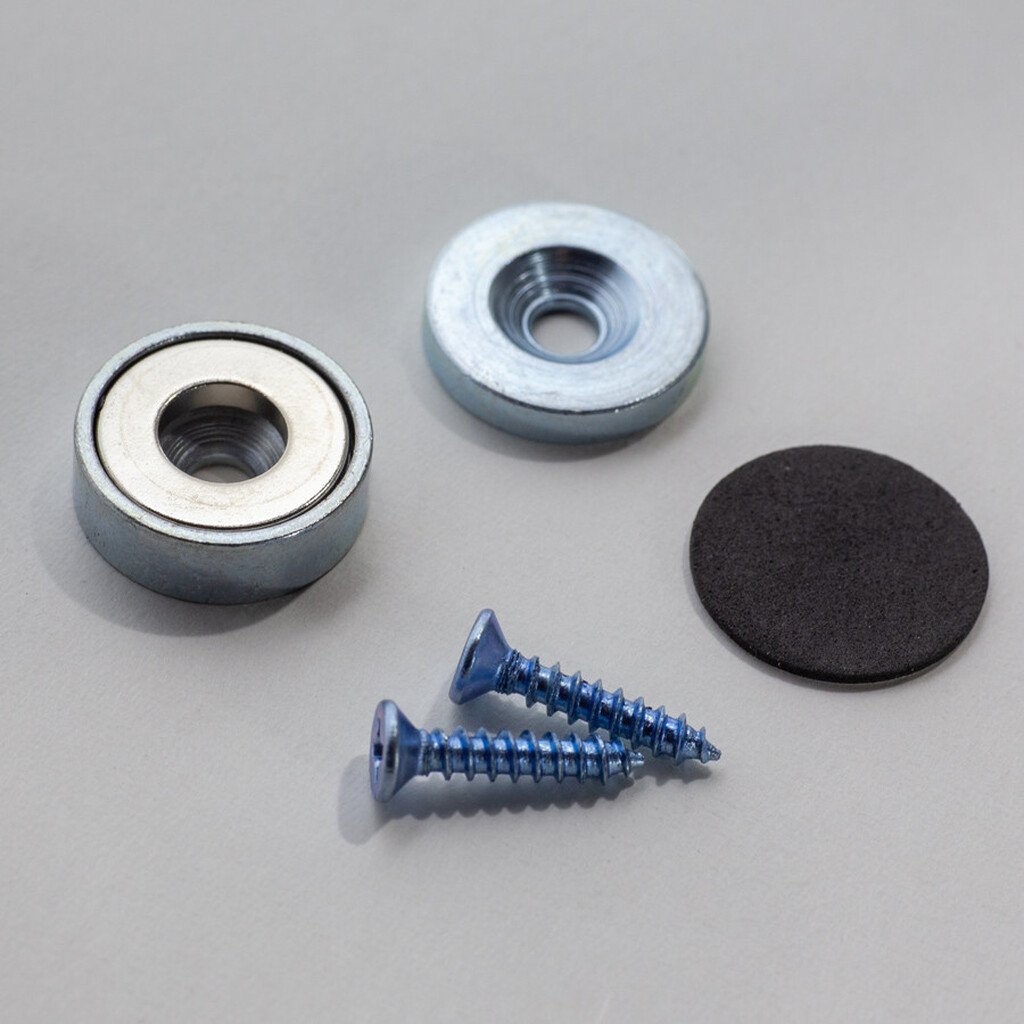
Cabinet latch magnet 22.2 × 7.1 mm
A compact magnetic assembly suitable for smaller cabinets, drawers, office furniture and discreet magnetic closures.
- Discreet design
- Simple installation
- Reliable closing
Neodymium magnets are among the strongest permanent magnets available. Their high magnetic strength allows them to keep wardrobe, display cabinet and chest-of-drawer doors securely closed.
More information is also available in the strong magnets category.
Our magnets are available in various colours, making it easy to match them to your furniture design. You can also choose from different shapes depending on the application and the desired appearance.
Which shape of cabinet magnet should you choose?
Rectangular magnets
They have a larger contact surface and provide greater closing stability. They are particularly suitable for larger cabinets, wardrobes and furniture doors.
Round magnets
An elegant and discreet solution suitable for smaller doors, drawers or office furniture.
Adjustable magnets
They allow more precise adjustment of the distance between the magnet and the counterpart. They are useful where doors are not perfectly aligned or where the closing force needs fine-tuning.
The pull force of cabinet magnets ranges approximately from 7.9 N to 35 N. This allows you to choose the right magnet according to the size and weight of the door.
How strong should a cabinet magnet be?
The correct magnetic strength depends on the size and weight of the door, hinge alignment and the gap between the magnet and its counterpart. In general, the heavier or larger the door, the stronger the magnet should be.
How does a magnetic cabinet closure work?
A magnetic cabinet closure works very simply. One part is attached to the cabinet frame and the other to the door. When the door closes, the two parts are drawn together by magnetic force and the door remains securely shut.
A major advantage is the simple construction without complicated mechanical components. A magnetic closure requires no routine maintenance and has a long service life when installed correctly.
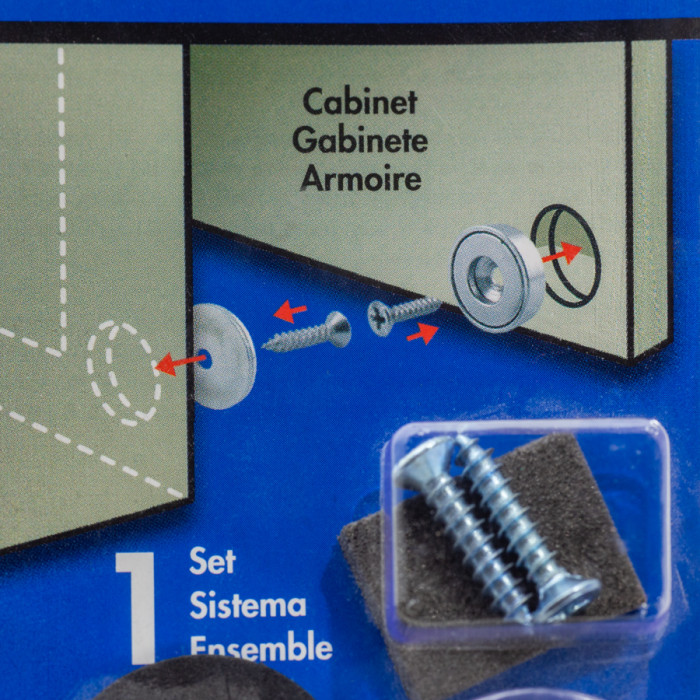
Installation procedure
- Attach the first part of the magnet to the cabinet frame.
- Fix the second part to the door.
- Tighten both parts using countersunk screws.
- Check that the magnet and counterpart make precise contact when the door is closed.
- When the door closes, the two parts are automatically drawn together by magnetic force.
A cabinet latch magnet assembly consists of two parts with holes for countersunk screws. One part is installed in the cabinet frame and the other in the door. When the door closes, the magnet pulls the two parts together and keeps the door securely shut.
A pack typically contains two magnet assemblies, which can be installed at both the top and bottom of the door. This provides an even firmer and more stable closure.
How to choose the right cabinet magnet
Size
Choose a suitable size according to the type of furniture, available installation space and door dimensions.
Magnetic strength
A higher pull force provides a firmer closure, although it is not always necessary for small doors.
Design
Choose a shape and colour that matches your furniture and does not look intrusive.
Mounting method
Screw mounting is the most common option. In some applications, a more discreet recessed solution can also be used.
When might a magnet alone not be enough?
A cabinet magnet solves most common door-closing problems, but sometimes the underlying cause of poor closing needs to be corrected first. If the door is significantly warped or badly adjusted, even a strong magnet may not work properly.
Before installation, check:
- whether the hinges are loose or incorrectly adjusted,
- whether the door is warped,
- whether the gap between the magnet and counterpart is too large,
- whether the magnet makes full-surface contact,
- whether the selected magnetic strength matches the weight of the door.
Where are cabinet magnets used?
Furniture magnets are used in homes, offices and furniture manufacturing. They are suitable for new cabinets as well as a simple upgrade for older furniture whose doors no longer stay closed as reliably as before.
- wardrobes,
- kitchen cabinets,
- chests of drawers,
- display cabinets,
- drawers,
- office cabinets,
- technical cabinets and covers.
Frequently asked questions about cabinet magnets
Are magnets suitable for all types of cabinets?
Yes. Magnetic closures can be used on most cabinets, chests of drawers, display cabinets and office furniture. The important thing is to choose the correct size and magnetic strength.
How strong a magnet should I choose?
Weaker models are sufficient for standard doors. For heavier doors, taller wardrobes or display cabinets, we recommend neodymium magnets with a higher pull force.
Is installing a magnet difficult?
No. Installation only takes a few minutes and can be completed by most users without specialist tools. Depending on the type of furniture, a screwdriver or drill is usually all that is required.
Will the magnet lose strength over time?
Under normal use in furniture, a magnet retains its strength for a very long time. It is important not to expose it to extreme temperatures, strong impacts or unsuitable environments.
Can the magnet be glued instead of screwed in place?
This is sometimes possible for light-duty applications, but for reliable long-term use we recommend screw mounting. Adhesive may not bond well to every surface and can loosen over time.
Is a magnet suitable for bathrooms or damp environments?
It depends on the specific design and surface finish. For more humid environments, choose magnets with suitable corrosion protection and make sure they are not permanently exposed to water.
What should I do if the door still does not stay closed?
Check the hinge adjustment, the distance between the magnet and counterpart, and whether both parts make proper contact. If the magnet is too weak, choose a stronger version or use two magnetic assemblies.
Is it better to install the magnet at the top or bottom?
For smaller doors, one magnet is usually sufficient. For tall or heavier doors, it is better to use two assemblies – one at the top and one at the bottom.
Summary: which cabinet magnet should you choose?
For standard cabinets, chests of drawers and lighter doors, choose a standard furniture or cabinet magnet. If you want a firmer closure, have heavier doors or need more magnetic strength from a smaller size, choose a neodymium cabinet magnet. Before installation, always check the hinges, the distance between the magnet and counterpart, and whether both parts make proper contact.
Looking for high-quality cabinet magnets?
Choose from our wide range of furniture and cabinet magnets in stock.