
Magnetic foils
Need advice? Frequently asked questions from customers.
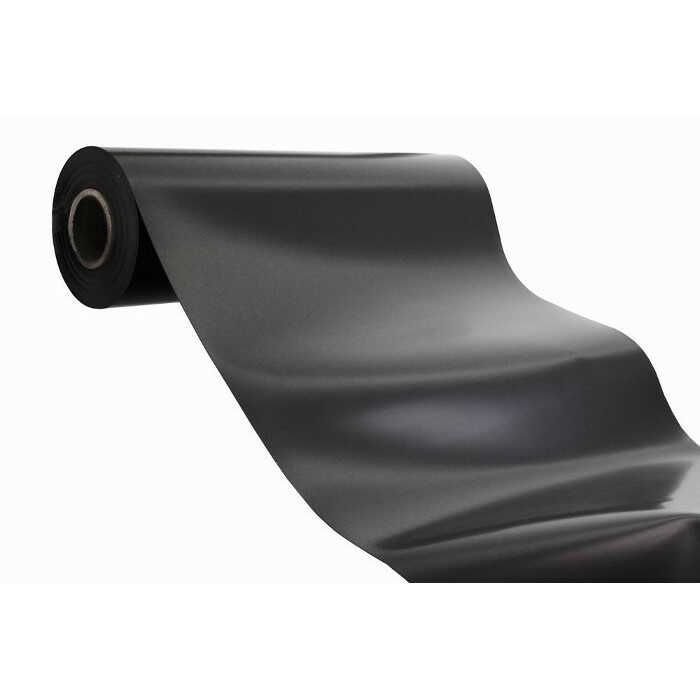
Magnetic foil is suitable as a printable advertising medium and also has a wide range of other uses. The adhesion of magnetic foil depends on the thickness of the material to which it is applied and the thickness of the foil itself. Magnetic foil can be cut with ordinary scissors or cut into the desired shapes. Self-adhesive magnetic foil cannot be used as a magnetic board for attaching magnets. It has too little iron content for this purpose.





Product sorting
List of products


Listing controls
1Decide which side needs to be magnetic
This is the question that sends most people to the wrong product. A magnetic foil holds on steel with its own magnetic surface; a self-adhesive foil has a magnetic face on one side and an adhesive layer on the other.
- Plain foil when you print or cut it and stick it straight onto steel.
- Self-adhesive foil when you need to make a non-magnetic object magnetic, for example the back of a sign, a frame or a plastic panel.
- Formatted sheets in A3, A4 and A5 when you want a ready size without cutting a roll.
2Choose the thickness for the job
Thickness runs from 0.4 mm to 2 mm, and it decides both the holding power and how the foil behaves when handled.
- 0.4 to 0.7 mm: printing, labels, light signage; flexible and easy to cut with scissors.
- 0.85 to 1 mm: the everyday compromise, stiff enough not to curl, still easy to cut.
- 1.5 to 2 mm: heavier signage and anything that has to stay flat on a vertical surface without lifting at the corners.
3Read the pull force per square centimetre
Foils are rated differently from solid magnets, in grams per square centimetre. Our formatted sheets run from about 29 to 74 g/cm², and the number tells you how much a given area will hold.
That makes the calculation simple: a sheet rated at 40 g/cm² covering 100 cm² holds roughly 4 kg in ideal contact. Halve your expectation for a painted or uneven surface, and remember that the whole area has to touch.
4Check the surface before you buy
A magnetic foil holds only on steel. Aluminium, stainless steel of the non-magnetic grades, glass, wood and plastic are all invisible to it, and no thickness will change that. Test the surface with a paperclip first.
If the surface is not magnetic, the fix is the reverse: apply a self-adhesive foil to the surface itself and use ordinary magnets against it.
5Apply it properly
Cut a magnetic foil with scissors or a sharp knife, always slightly larger than you need and trim afterwards. With self-adhesive versions, degrease the surface, peel the liner gradually and press from the centre outwards to avoid trapping air.
Tip: If a foil sign keeps lifting at the corners on a vehicle or a door, the problem is almost always thickness rather than magnetic strength. Move up to a 1 mm or thicker foil, which keeps the edge pressed flat instead of letting airflow get underneath.
Related categories to the Magnetic foils category
- Formatted magnetic foils
- Ordinary magnetic foils
- Self-adhesive magnetic foils
- Magnetic foil cut-outs
- Magnetic foils for cars
- Format A3
- Format A4
- Format A5
- Thickness 0.4 mm
- Thickness 0.5 mm
- Thickness 0.7 mm
- Thickness 1 mm
- Thickness 1.5 mm
- Thickness 2 mm
- Self-adhesive 0.5 mm
- Self-adhesive 0.85 mm
- Self-adhesive 1 mm
- Pull force 29 g/cm²
- Pull force 74 g/cm²
- Adhesive magnetic board
Frequently asked questions about magnetic foils
A plain foil is magnetic on one face and holds directly on steel, which is what you want for printed signs and labels. A self-adhesive foil has a magnetic face on one side and an adhesive layer on the other, so you use it to make a non-magnetic object magnetic, such as the back of a sign, a plastic panel or a wooden frame.
Thicknesses run from 0.4 to 2 mm. Use 0.4 to 0.7 mm for printing, labels and light signage, 0.85 to 1 mm as the everyday compromise between stiffness and easy cutting, and 1.5 to 2 mm where the foil must stay flat on a vertical surface without lifting at the corners.
It is the holding power of each square centimetre of contact area, which is how foils are rated instead of a single figure in kilograms. Our formatted sheets run from about 29 to 74 g/cm². A sheet rated at 40 g/cm² covering 100 cm² therefore holds roughly 4 kg in ideal contact, and considerably less on a painted or uneven surface.
Yes. Unlike solid magnets, foils are flexible and can be cut with scissors, a knife or a plotter. Cut slightly oversize and trim afterwards, since a foil is easier to reduce than to enlarge. Formatted A3, A4 and A5 sheets and ready cut-outs save you the work if you need a standard size.
Almost certainly because the surface is not steel. Aluminium, non-magnetic stainless steel, glass, wood and plastic do not attract magnets at all, and no thickness will change that. Test with a paperclip first. If the surface is not magnetic, apply a self-adhesive magnetic foil to the surface itself and work against it with ordinary magnets.
Magnetic foil is the flexible answer to a rigid problem: you can cut it, print on it and stick it where a solid magnet would never fit. Our range covers thicknesses from 0.4 to 2 mm, formatted A3, A4 and A5 sheets, self-adhesive versions for making non-magnetic objects magnetic, ready cut-outs and foils for vehicles. Holding power is stated where it belongs, in grams per square centimetre, from about 29 to 74 g/cm², so you can size the area instead of guessing.
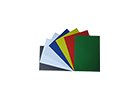
Magnetic foils serve various purposes. They can be used at home, in the office, in businesses, and in shops. In the magnetic foil category, you will find ordinary magnetic foils, self-adhesive foils, adhesive magnetic boards, and colored magnetic foils. The advantage is that they are usually printable and can be cut into the desired shapes using ordinary scissors.
Colored magnetic sheets can be used, for example, to make fridge magnets, as decorations, or for creative activities with children. Try creating magnetic animals, smileys, puzzles, tangram shapes, and seasonal decorations. The sheets are writable, so you can easily label store shelves, mark your planner, file cabinet, or stick them on your car.
Magnetic foil can be used to mark tasks on a TO DO list, attach notes or receipts to a bulletin board, or customer orders. Magnetic foil is available in various formats – A3, A4, A5 – and can be cut to size as desired.


