
How Does a Magnet Work? Fields, Poles and Magnetism
How Does a Magnet Work? Fields, Poles and Magnetism
A magnet is an object that creates a magnetic field and can attract certain materials, particularly iron, nickel, cobalt and their alloys. Magnetism arises from the behaviour of electrically charged particles in atoms and their arrangement within a material.
- A magnet acts on its surroundings through a magnetic field.
- The strongest effect is near its poles.
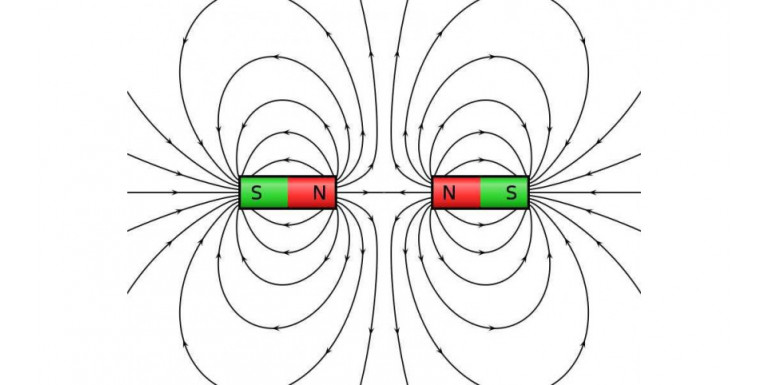
- Like poles repel; opposite poles attract.
- Permanent magnets retain their properties over the long term.
- Neodymium magnets are among the strongest magnets available.
Why is matter magnetic? What causes this property? Atoms contain electrons and protons, and most also contain neutrons. In quantum mechanics, magnetism is primarily linked to the behaviour of electrons, their spin and their motion around the nucleus. In some materials, the magnetic moments of particles cancel out, while in others they produce a net magnetic field.
Why are some materials not magnetic?
In most substances, the magnetic moments of individual particles cancel each other out. This means that the resulting magnetic field is not apparent externally. In ferromagnetic materials, however, the particles are arranged differently, so they respond more strongly to a magnet.
Magnetic moments
An atom’s magnetic properties arise mainly from its electrons and their spin. If their effects cancel out, the material does not behave like a magnet externally.
Ferromagnetic materials
Iron, nickel and cobalt are among the materials that can be magnetised easily. This makes them useful in the manufacture of strong magnets.
The magnetic moments of particles cancel out
The arrangement of particle spins in atoms and molecules plays a role. According to the Pauli exclusion principle, two fermions cannot occupy the same quantum state. In practice, the magnetic effects of individual particles in many substances compensate for each other, leaving a very weak or zero net magnetic field.

Greater alignment produces a stronger magnet
In permanent magnets, there is a much higher degree of alignment. Magnetic domains play a major role: these are regions in which magnetic moments point in the same direction. Greater alignment produces a stronger net magnetic field.
Ferromagnetic materials naturally have this ordering within domains and can therefore be used to make permanent magnets. Particularly strong and popular examples include neodymium magnets.
What is a permanent magnet?
A permanent magnet retains its magnetic properties even without an external magnetic field. This is why it is used in industry, technology, homes and specialist applications.
How does a magnetic field act?
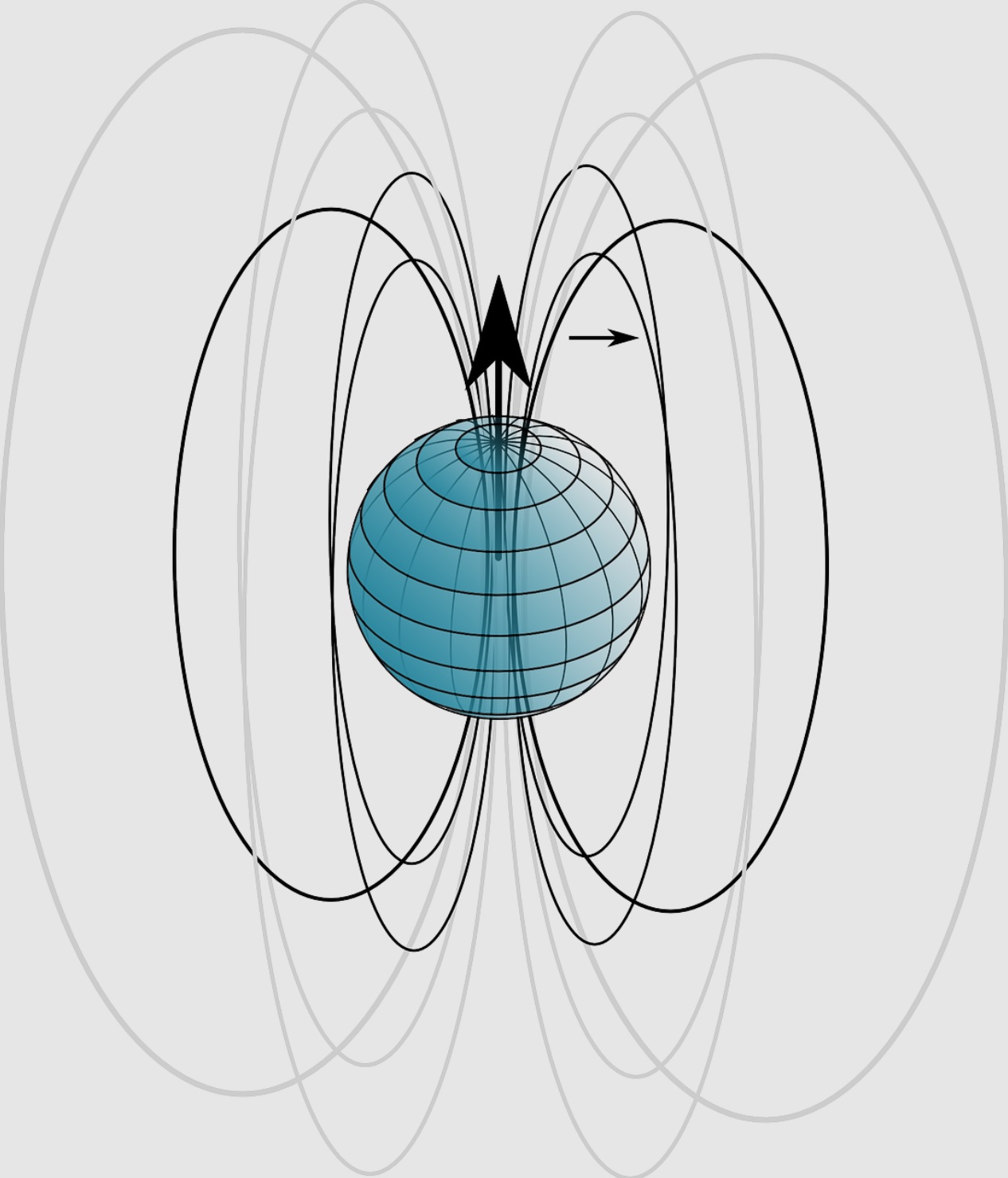
A magnetic field is apparent mainly through its effect on ferromagnetic materials. This is easiest to see near the poles of a magnet. Every magnet has a north pole marked N and a south pole marked S.
A simple rule applies: opposite poles attract, while like poles repel. This principle underlies magnetic closures, catches, holders and other magnetic solutions.

Neodymium cylinder magnet, diameter 6 × 4 mm, N
A compact, very strong neodymium magnet suitable for technical and hobby applications.
View product
Neodymium cylinder magnet, diameter 10 × 1.5 mm, N
A practical strong magnet for finer applications where low height and high performance are important.
View product
Neodymium block magnet 8 × 4 × 1.6 mm, P
A small, flat magnet with high strength, suitable for precise attachment, model making and smaller technical assemblies.
View productWhich types of magnets are used in practice?
Magnets have a wide range of uses in homes, industry and technology. They are used for attachment, material separation, door closures, making holders and advertising systems, and creative projects.
- neodymium magnets for strong attraction,
- ferrite magnets for everyday use,
- magnets for closing cabinets and doors,
- magnetic holders and mounts,
- technical and industrial magnetic applications.
The strongest magnets in the range
If you need a particularly strong solution, explore the strong magnets category. Neodymium offers very high magnetic strength even at small dimensions, making it an ideal material for modern magnetic applications.
Summary
Magnetism arises from the behaviour and arrangement of particles in an atom. In some materials, magnetic moments cancel out; in others, they align to create a strong magnetic field. Permanent magnets, including neodymium magnets, put this effect to practical use.
Looking for strong magnets?
Choose from neodymium magnets that provide high strength even in a small size.