
Ferrite magnets cylinders - parallel to the axis
Ferrite cylinder magnets with magnetization along parallel axes provide an economical and technically reliable solution for a wide range of applications, from industry to home workshops. These ceramic permanent magnets, made from iron oxides (SrFe, BaFe), offer excellent corrosion resistance and can operate at working temperatures of up to approximately +250 °C.

Product sorting
Brands
Tearing force range (kg)
Temperature resistance range
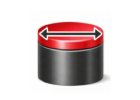
Diameter range A (mm)
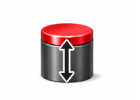
Height range B (mm)
Type
List of products


1Read the two numbers and the magnetisation
A cylinder listed as dia.20x10 has a diameter A of 20 mm and a height B of 10 mm. The category name tells you the rest: these magnets are magnetised parallel to the axis, so the poles sit on the two circular faces and the magnet holds on its flat end.
The curved side surface is magnetically neutral, which matters if you were planning to seat the magnet in a tube and expect it to grip sideways.
2Match the diameter to the job
The range covers diameters from under 5 mm up to over 55 mm, with the bulk sitting between 10 and 30 mm. That middle band is the classic office and board size, the one most people picture when they think of a black magnet.
Filter by diameter and height separately rather than scrolling the whole list, since the two dimensions do different jobs: the diameter drives the force, the height drives how well the magnet works across a gap.
3Expect a realistic pull force
Ferrite cylinders in this range work in the bands from under 0.3 kg up to 5 kg. That covers notes, papers, light signage, board work and small covers. For anything heavier, either move to a large ferrite block or switch material to neodymium.
Apply the usual reserve of 2 to 3 times the weight, and remember the rating assumes direct contact with thick, clean steel rather than a painted board.
4Mount it without machining it
Ferrite cannot be drilled or cut with ordinary tools, so plan the fixing around a complete magnet:
- Glue with two-component epoxy onto a clean, degreased surface.
- Recess it into a pocket about 0.2 mm larger than the diameter and bond it in.
- Clamp it mechanically with a plate or a ring rather than a screw through the body.
If you need a screw through the centre, choose a ferrite ring, which is made with the hole from the start.
5Use the heat resistance where it pays
These cylinders carry the temperature rating of the material, which runs well above 150 °C and in part of the range beyond 200 °C. A cheap ferrite cylinder in a warm machine housing or a light fitting will outlast a neodymium magnet several times its price.
Tip: For anything visible on a whiteboard or a noticeboard, take the coloured versions instead of the bare black ones. Raw ferrite is slightly dusty and leaves marks on light paper and paintwork over time.
Related categories to the Ferrite cylinder magnets category
- Selection by diameter A
- Selection by height B
- Selection by pull force
- Diameter up to 5 mm
- Diameter 5 to 10 mm
- Diameter 10 to 15 mm
- Diameter 15 to 20 mm
- Diameter 25 to 30 mm
- Height up to 5 mm
- Height 5 to 10 mm
- Height 10 to 15 mm
- Height 15 to 20 mm
- Pull force up to 0.3 kg
- Pull force 0.3 to 1 kg
- Pull force 1 to 2 kg
- Pull force 2 to 5 kg
- Coloured ferrite magnets
- Ferrite blocks
- Ferrite rings
- All ferrite magnets
Frequently asked questions about ferrite cylinder magnets
It describes the direction of magnetisation. The magnetic field runs along the axis of the cylinder, so the north and south poles sit on the two circular faces and the magnet holds on its flat end. The curved side surface is magnetically neutral and will not grip a tube wall or a shaft.
The first number is the diameter A and the second the height B, in millimetres. A dia.20x10 magnet is therefore 20 mm across and 10 mm tall. Both dimensions can be filtered separately on this page, which is the quickest way to find a piece that fits a specific pocket or hole.
They cover the bands from under 0.3 kg up to 5 kg, which suits notes, papers, light signage, board work and small covers. For a heavier load, either move to a large ferrite block or choose neodymium, which delivers several times more force from the same size of body.
Bond it with two-component epoxy onto a clean, degreased surface, or recess it into a pocket about 0.2 mm larger than the diameter. Ferrite cannot be drilled with ordinary tools, so if you need a screw through the centre choose a ferrite ring, which is manufactured with the hole already in it.
It can over time. Raw ferrite has a slightly dusty ceramic surface which leaves grey marks on light paper and paintwork with repeated use. For anything visible on a whiteboard or a noticeboard, the coloured versions are the better choice, and they are ferrite magnets too.
Ferrite cylinders are the everyday workhorse of the magnet world: cheap, heat resistant and rust proof. Ours run from under 5 mm to over 55 mm in diameter, all magnetised parallel to the axis so they hold on the flat face, with a pull force from a few grams up to 5 kg. Diameter and height are filterable separately, and each product states its dimensions, pull force and maximum working temperature. Prices start at a few cents per piece, which makes them the practical choice for large quantities.


