
Magnets for oven gloves
Magnets for oven gloves and clothing: what are they useful for?
Sew-in magnets are a practical solution for oven gloves, clothing, curtains, handbags and other textile products. By sewing a magnet into the fabric, you can keep useful items close at hand, fasten them neatly or create a discreet and reusable closure.
- You will learn how to safely sew a magnet into an oven glove or clothing.
- We will show you how to wash textiles containing a sew-in magnet.
- We will explain why neodymium sew-in magnets are so popular.
- We will add tips for other uses around the home and beyond.
- We will also recommend suitable products for textile and everyday use.
In the kitchen, it is useful to keep important items close at hand, which is why magnets in oven gloves can be very practical. If you sew a suitable magnet into an oven glove, you can simply attach it to a magnetic strip next to other kitchen tools and always keep it visible.
Sew-in magnets are not only useful in the kitchen. They can also be used in clothing, curtains, bags, wallets, decorations and various creative or practical textile modifications.
Why use a magnet in an oven glove or clothing?
A sew-in magnet makes it possible to create a hidden and elegant fastening without complicated mechanical components. In oven gloves, this means you can easily attach them to a metal strip or another metal surface. In clothing, accessories or other textiles, the magnet can replace a simple fastener or serve as a discreet fixing aid.
The main advantages are reusability, simplicity and the option of sewing the magnet discreetly directly into the fabric.
How do you sew a magnet into oven gloves and clothing?
To prevent the magnet from being attracted to the metal parts of a sewing machine, it can be more practical to work with two magnets attached to each other. This partially balances their magnetic force and can make the work a little easier. In many cases, however, hand sewing is the safest and most precise option.
Recommended procedure
- Prepare two magnets and attach them to each other.
- Start by sewing in the lower magnet.
- Then sew the upper magnet into the corresponding position.
- Check the alignment and that the magnets meet correctly.
- If possible, prefer hand sewing for better control.
It is important to choose the magnet's position carefully so that it stays securely in the fabric, does not interfere with use and remains sufficiently functional for the required fastening or closure.
How do you wash clothing with magnets?
If the magnet is enclosed in a high-quality protective cover, it can be resistant to moisture and normal washing. Even so, it is advisable to proceed carefully and minimise the risk of damaging both the textile and the magnet itself.
Using laundry bags is recommended so that the magnet does not stick to the metal drum of the washing machine or other parts. This helps reduce impacts, unnecessary pulling on the fabric and possible damage to the magnet.
What should you watch out for when washing?
- Use a laundry bag.
- Do not exceed the recommended washing temperature.
- Higher temperatures can weaken or demagnetise the magnet.
- Before washing, check the stitching and the condition of the plastic cover.
In general, sew-in magnets should be washed only up to the maximum temperature that the specific product can safely withstand. Excessive heat can negatively affect their magnetic strength.
Sew-in magnets
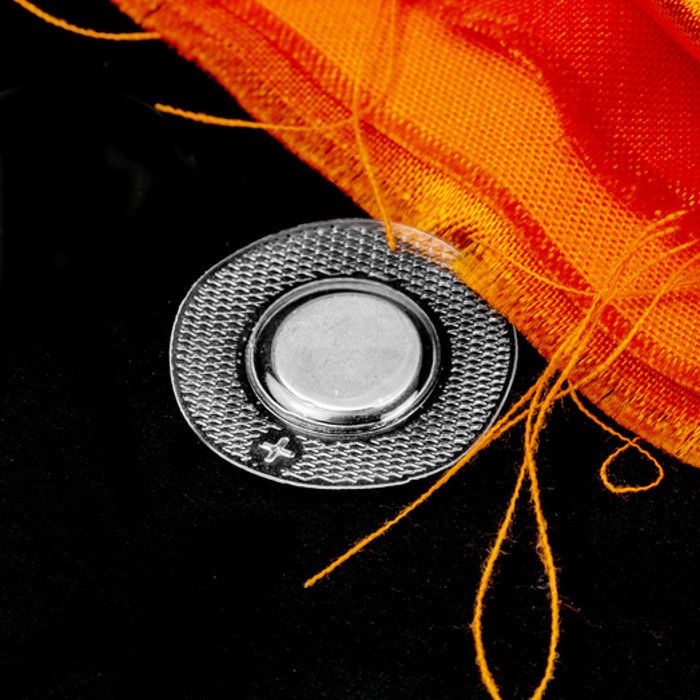
Our sew-in magnets are made from a neodymium magnet, one of the strongest types of permanent magnets.
Each magnet is typically enclosed in a flexible waterproof plastic cover that helps protect it from moisture and corrosion. This provides a longer service life, greater durability and more practical use in textiles.
The wider edges of the plastic cover also make it easier to sew the magnet onto fabric or another textile material.
Which magnet should you choose?
The choice mainly depends on how strong the fastening needs to be and what the magnet will be sewn into. For lighter textile applications, a smaller or weaker version may be sufficient. If you need a firmer hold, it is worth choosing a stronger neodymium magnet.
In some cases, a ferrite magnet can also work well if you do not require extremely high strength and prefer a simpler or more affordable solution.
More tips for using sew-in magnets
Sew-in magnets are primarily designed for clothing, costumes, curtains, home textiles and various types of haberdashery. They are most often sewn into a hem or fold in the fabric so that they remain hidden and do not affect the appearance of the product.
However, there are many other possible uses:
- in wallets and handbags,
- in curtains and screens,
- in camper vans, caravans and tents,
- in tactical equipment,
- in various protective textile products,
- in decorations and creative projects.
Which magnets are suitable for similar applications?
For textile applications, sew-in neodymium magnets in a plastic cover are ideal. If you are also looking for magnets for general household use, the kitchen, organisation or other experiments, standard ferrite magnets or smaller neodymium magnets can also be useful.
Not sure which magnet to choose?
For sewing into textiles, a neodymium sew-in magnet in a plastic cover is usually the best choice. For ordinary household use or simpler applications, ferrite magnets or smaller neodymium magnets may also be suitable.
Recommended products
If you are looking for magnets for textile applications, household use or everyday practical purposes, you can choose from options such as these:
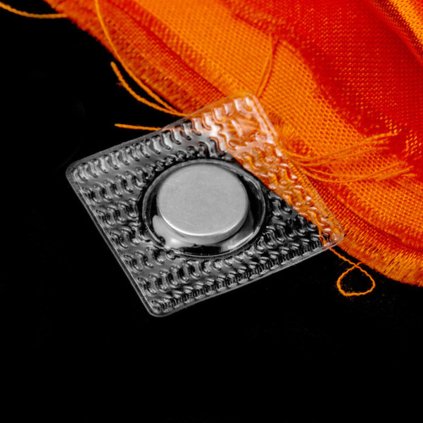
Sew-in NdFeB magnet dia. 12x2 mm with a square PVC cover
Sew-in neodymium magnet with a diameter of 12 mm and a height of 2 mm in a square PVC cover.
- Pull-off force 1.2 kg (12 N)
- Square PVC cover 28 x 28 mm
- NdFeB magnet type
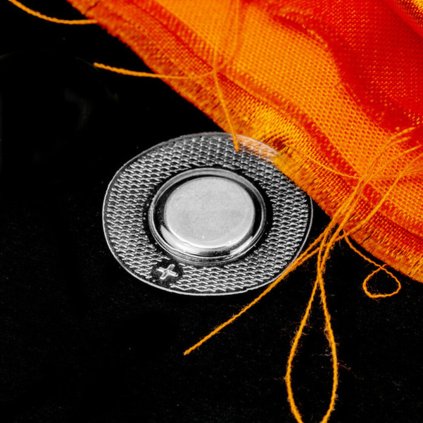
Sew-in NdFeB magnet dia. 12x2 mm with a round PVC cover
Sew-in neodymium magnet with a diameter of 12 mm and a height of 2 mm in a round PVC cover.
- Pull-off force 1.2 kg (12 N)
- Round PVC cover with a diameter of 28 mm
- NdFeB magnet type
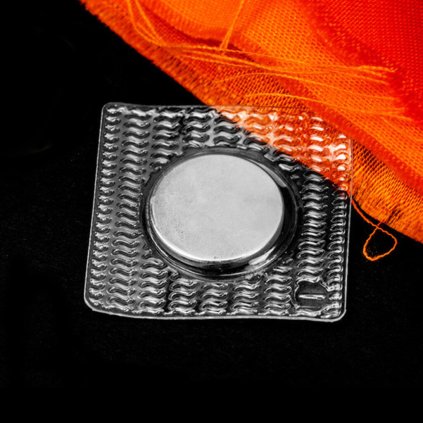
Sew-in NdFeB magnet dia. 18x2 mm with a square PVC cover
Sew-in neodymium magnet with a diameter of 18 mm and a height of 2 mm in a square PVC cover.
- Pull-off force 1.9 kg (19 N)
- Square PVC cover 35 x 35 mm
- NdFeB magnet type
Frequently asked questions about magnets for oven gloves and clothing
Can a magnet really be sewn into an oven glove?
Yes. If the magnet is enclosed in a protective plastic cover or is specifically designed for sewing in, it is suitable for textile applications.
Is it safe to wash textiles with a magnet sewn in?
Usually yes, provided the magnet is properly protected and you follow the recommended washing conditions. Using a laundry bag is advisable.
Which magnet is best for textiles?
A neodymium sew-in magnet in a plastic cover is most commonly used because it provides high strength and better protection against moisture.
Can I sew a magnet into a handbag or wallet?
Yes. Sew-in magnets are very commonly used in handbags, wallets and other textile accessories.
What if I only need a basic magnet for ordinary use?
Standard ferrite magnets or smaller neodymium versions can also work well, depending on the required strength and size.
Summary
Sew-in magnets are a practical solution for oven gloves, clothing, curtains, handbags and other textile products. They can help keep items better organised, easily accessible and neatly secured. Neodymium magnets in a protective plastic cover are usually the best choice for textile applications. Ferrite magnets or smaller neodymium magnets can also be used for ordinary household and simple practical purposes.
Looking for magnets for textiles, the home and everyday use?
Choose from our range of ferrite and neodymium magnets for the kitchen, home, workshop and creative projects.