
Where does magnetic force come from?
What is magnetic force?
Magnetic force is the force exerted by a magnetic field on magnets, electric charges or conductors carrying electric current. It is one of the basic concepts of electromagnetism and has important applications in technology, physics and everyday life.
- We will explain what magnetic force means and what it depends on.
- We will show the basic relationships used to describe it.
- We will look at the direction of magnetic force and practical rules.
- We will explain its relationship with conductors, current and magnetic fields.
- We will add suitable magnets for experiments, school demonstrations and everyday use.
Magnetic force is a basic concept related to magnets and magnetic fields. Just as a gravitational field exerts gravitational force on material objects and an electric field exerts force on electric charges, a magnetic field also exerts force on magnets and current-carrying conductors.
We encounter magnetic force not only in laboratories but also in everyday life. Electric motors, generators, speakers, certain types of locks, various magnetic holders and technical devices all work thanks to it.
How does magnetic force work between magnets?
Magnetic force between two magnets is a basic phenomenon that enables the practical use of magnets at home, in workshops and in industry. The magnitude of this force depends on the properties of the magnets, their orientation and the distance between them.
In general, the closer the magnets are to each other, the stronger their mutual interaction. Magnets can either attract or repel each other depending on how their poles are oriented.
Coulomb's law and the distance between magnets
Charles Coulomb carried out experiments that led to the establishment of a relationship between magnetic force and the distance between magnetic poles. His research showed that the attractive or repulsive force is inversely proportional to the square of the distance.
This means that as the distance between two magnets increases, the resulting force decreases rapidly. This is why even a strong magnet can appear weak if it is too far away from a metal object or another magnet.
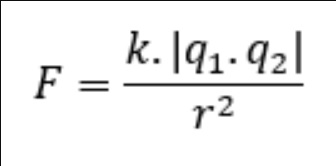
Where:
- F is the force between two charges or poles,
- k is Coulomb's constant,
- q1 and q2 represent the magnitudes of the charges,
- r is the distance between them.
In practice, this relationship helps us understand why magnetic force changes with distance and why small changes in position between magnets are often very noticeable.
Simple rule
The closer the magnets, or a magnet and a metal object, are to each other, the stronger the magnetic force usually is. As the distance increases, the force decreases rapidly.
Magnetic force – equation
Determining magnetic force is important for understanding the behaviour of magnetic fields and moving charges. The Lorentz force is used to describe the force acting on a charge in a magnetic field.
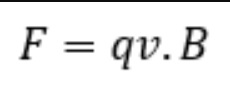
Where:
- F is the magnetic force acting on the charge,
- q is the magnitude of the charge,
- v is the velocity of the charge,
- B is the magnetic field.
The magnitude of the magnetic force can also be expressed by the relationship:
F = qvBsin(θ)
Where:
- F is the magnitude of the magnetic force,
- q is the magnitude of the charge,
- v is the velocity of the charge,
- B is the magnitude of the magnetic field,
- θ is the angle between the direction of the charge's velocity and the direction of the magnetic field.
This relationship shows that magnetic force depends not only on the magnitude of the field and the charge, but also on the direction of the particle's motion relative to the magnetic field.
Direction of magnetic force
The direction of magnetic force can be determined using the right-hand rule. If you position your right hand so that your fingers point in the direction of motion of a positive charge and your thumb corresponds to the direction of the magnetic field, then the direction of the force is determined by the position of the remaining fingers according to the chosen physical rule.
It is important to realise that magnetic force acts perpendicularly to both the direction of motion of the charge and the direction of the magnetic field. This is why particles or currents are deflected or curved under suitable conditions.
Magnetic force and current-carrying conductors
Magnetic force does not arise only between two magnets or between a field and a particle. It is also very important in conductors through which electric current flows. When electric current passes through a conductor, a magnetic field is created around it.
This principle forms the basis of electric motors, generators and many other electrical devices. If a current-carrying conductor is placed in an external magnetic field, a force begins to act on it.
To describe this interaction, Ampère's law is used, which helps determine the relationship between current and the magnetic field.
∮ B · dl = μ0 · Ienc
The direction of force on a current-carrying conductor is often determined using Fleming's left-hand rule, which helps with the practical understanding of a conductor's behaviour in a magnetic field.
Magnetic force in practice
Magnetic force has many practical applications. One historical example is older CRT television screens, where magnetic force deflected the path of electrons and helped create the image on the screen.
Another very important application is in electric motors and generators. Electric motors convert electrical energy into mechanical energy, while generators convert mechanical energy into electrical energy. In both cases, magnetic force is one of the basic principles behind their operation.
You will also encounter it in speakers, sensors, magnetic locks, relays and many other devices that we now consider an ordinary part of modern technology.
Which magnets are suitable for experiments with magnetic force?
If you want to demonstrate magnetic force in practice, for example in school experiments, home experiments or technical tests, neodymium magnets are very suitable. Thanks to their small size and high strength, they make it easy to demonstrate attraction, repulsion and the effect of distance.
Not sure which magnet to choose for experiments?
For simple demonstrations of magnetic force, attraction and working with metal objects, we recommend smaller neodymium magnets. They provide high strength despite their very small size.
Recommended products
If you want to try magnetic force in practice, take a look at these compact and strong neodymium magnets:

Neodymium magnet cylinder dia. 6x4 N
A compact, strong magnet suitable for home experiments, school demonstrations and everyday technical use.
- Small size
- Strong neodymium material
- Wide range of uses

Neodymium magnet cylinder dia. 10x1.5 N
A flat neodymium magnet suitable for more precise work, smaller surfaces and simple magnetic field experiments.
- Low profile
- Strong magnetic effect
- Easy to handle

Neodymium magnet prism 8x4x1.6 P
A small prism-shaped magnet suitable for more precise work, testing metals and applications where a rectangular shape is more practical.
- Compact size
- Strong neodymium material
- Suitable for finer work
Frequently asked questions about magnetic force
What does magnetic force between two magnets depend on?
It mainly depends on the strength of the magnets, their orientation and the distance between them. The closer they are, the greater the magnetic force usually is.
Why does magnetic force decrease with distance?
Because the magnetic field becomes weaker with distance. This phenomenon is described by basic physical relationships used in electromagnetism.
Where is magnetic force used in practice?
For example, in electric motors, generators, speakers, electromagnets, locks and measuring or sensing devices.
How can I determine the direction of magnetic force?
In physics, right-hand or left-hand rules are used to determine the direction depending on the specific situation and the type of charge or current.
Are neodymium magnets suitable for magnetic force experiments?
Yes. Thanks to their high strength at a small size, they are suitable for home and school experiments and clear demonstrations.
Summary
Magnetic force is a fundamental part of electromagnetism and affects the behaviour of magnets, electric charges and current-carrying conductors. It depends on the magnitude of the magnetic field, orientation and distance. In practice, it is used in a wide range of devices, from electric motors to simple household magnets. If you want to try its effects in practice, neodymium magnets are an ideal choice.
Looking for magnets for experiments and practical use?
Choose strong neodymium magnets for home experiments, school demonstrations and technical use.