
How can a permanent magnet be made?
How are permanent magnets made?
Permanent magnets are produced using specialised manufacturing processes, most commonly based on powder metallurgy, sintering or precision casting. The exact technology differs according to the type of magnet, but the goal is always to create a material with permanent magnetic properties, the correct shape and a long service life.
- You will learn how permanent magnets are manufactured step by step.
- We will explain what powder metallurgy and sintering mean.
- We will show the differences between the production of neodymium, ferrite, Alnico and SmCo magnets.
- You will find out why precise shape and corrosion protection are important.
- We will also add recommended products from less common types of magnets.
Magnetism plays a crucial role in the world of technology and science, and permanent magnets are an indispensable part of it. They can be found in motors, sensors, speakers, measuring instruments and many other devices that we use every day.
But how are these small technical wonders actually made? Magnet production is a precise process in which material composition, temperature, pressing method and subsequent surface protection all play an important role. Different types of magnets use different production technologies, and that is what we will look at in more detail.
Permanent magnet manufacturing process
Each type of magnet has its own specific manufacturing process, but powder metallurgy plays a key role in most of them. This process begins by mixing the individual components in precise proportions. These are typically fine powders of oxides or metallic elements that later form the basis of the future magnet.
The result is a fine powder mixture that is further processed by pressing, heating and other steps to create a solid material with the required magnetic properties.
Creating a compact structure
An important stage of production is sintering. During this process, the pressed powder is heated to a very high temperature, allowing the individual particles to bond and form a solid, compact structure. This structure is often similar to ceramic and gives the magnet its final strength and stability.
It is through this process that the magnet gains its permanent form and can then be further finished, ground or given surface protection depending on the material and intended use.
Why is sintering important?
Sintering bonds fine particles of material into a solid whole. Without this step, the magnet would not have the required mechanical strength or stable magnetic properties.
Magnet shapes and dimensions
Magnets must have a precise shape and dimensions during production because after sintering they are usually very hard and cannot be easily machined using conventional methods. The correct shape therefore needs to be designed and created as accurately as possible during the manufacturing process itself.
In some cases, fine grinding is possible, but care must be taken to avoid overheating the magnet and reducing its properties.
Protection against corrosion
Some magnets are susceptible to corrosion and therefore need a protective surface coating. Nickel, zinc or other protective materials are used to prevent contact between the magnet and atmospheric moisture and to extend its service life.
This is particularly important for neodymium magnets, which provide high strength but could corrode in unsuitable environments without surface protection.
Different types of permanent magnets
There are several types of permanent magnets, each with its own manufacturing technology, properties and suitable applications. The best known include neodymium magnets, ferrite magnets, Alnico magnets and samarium-cobalt magnets.
Neodymium magnets (NdFeB)
Neodymium magnets are known for their very high magnetic strength. They are made from a mixture of neodymium, iron and boron.
- The first step is melting the raw materials in a vacuum environment to create a hot metal mixture.
- This mixture is then cooled and ground into a fine powder.
- The powder is pressed into the required shapes and then strengthened by sintering.
- Finally, the magnet is usually given a protective coating, most commonly nickel or zinc.
Ferrite magnets
Ferrite magnets, often referred to as ceramic magnets, are made from a mixture of iron oxide and barium or strontium carbonate.
- The mixture is calcined at a high temperature to form hexaferrite.
- It is then ground into a fine powder and pressed into shape.
- The magnets are strengthened by sintering at temperatures of around 1250 °C.
- A major advantage of ferrite magnets is their good corrosion resistance.
Alnico magnets
Alnico magnets are made from a mixture of aluminium, nickel, cobalt and iron. Their production differs from powder metallurgy and often uses casting techniques.
- Casting into moulds or precision casting is used.
- The magnets are then finished by grinding to achieve precise dimensions.
- A major advantage of Alnico magnets is their good temperature resistance.
Samarium-cobalt magnets (SmCo)
Samarium-cobalt magnets are made from a mixture of samarium and cobalt. Their production is technologically more demanding, but the result is magnets with high resistance to both temperature and corrosion.
- The material is melted and further processed through several precise steps.
- Sintering is also an important part of the manufacturing process.
- The resulting magnets have high corrosion resistance and good stability under demanding conditions.
When are Alnico and SmCo magnets used?
These types of magnets are mainly suitable for special applications where higher temperature resistance, corrosion resistance or stability in more demanding environments is important.
Comparison of selected magnet types
Not sure which type of magnet to choose?
If you are looking for high strength, a neodymium magnet is usually the best choice. However, if you need higher temperature resistance or better corrosion resistance, Alnico or samarium-cobalt magnets are also worth considering.
Recommended products
If you are interested in special types of permanent magnets, take a look at these selected products. They are suitable for technical use, experiments and specific applications where the properties of SmCo or Alnico magnets are useful.

Samarium magnet cylinder dia. 3x2
A small samarium-cobalt magnet suitable for technical use, precision applications and environments where resistance is important.
- Compact size
- Good corrosion resistance
- Suitable for special applications

Samarium magnet prism 10x8x5
A samarium-cobalt prism magnet suitable for more demanding applications where stability and resistance are important.
- Higher temperature resistance
- Good corrosion resistance
- Practical prism shape
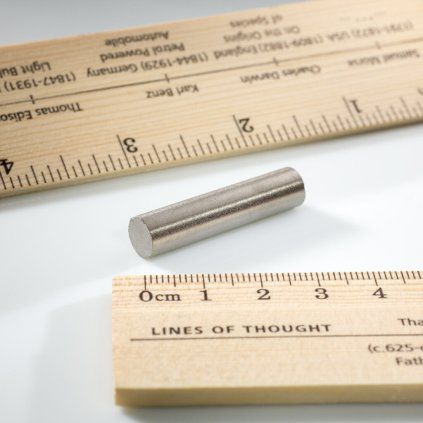
Samarium magnet cylinder dia. 8x35
A longer samarium-cobalt cylindrical magnet suitable for technical and specialised applications where good temperature stability and corrosion resistance are important.
- Good temperature stability
- High corrosion resistance
- Practical cylindrical shape
Frequently asked questions about permanent magnet production
How are permanent magnets most commonly made?
Very often using powder metallurgy, pressing and sintering. However, the exact process depends on the specific type of magnet.
Why is sintering important?
Because it bonds the individual particles of material into a solid structure and helps create the final mechanical and magnetic properties of the magnet.
Why do some magnets have a protective coating?
Some materials, especially neodymium magnets, can be susceptible to corrosion. A protective coating helps extend their service life.
What is the difference between Alnico and SmCo magnets?
Both types are used for more specialised applications, but they differ in composition and properties. SmCo magnets are known for good corrosion resistance and stability, while Alnico magnets offer higher temperature resistance.
Can finished magnets be machined easily?
Usually not. After sintering, they are very hard and brittle, which is why it is important to create the precise shape during production. With some types, only fine grinding is possible.
Summary
Permanent magnets are produced using precise manufacturing processes such as powder metallurgy, pressing, sintering or casting. Each type of magnet has its own specific properties and is suitable for different applications. If you are looking for magnets for special technical applications, samarium-cobalt or Alnico magnets are also worth considering.
Looking for special types of permanent magnets?
Choose from samarium and Alnico magnets for technical, industrial and specialised applications.